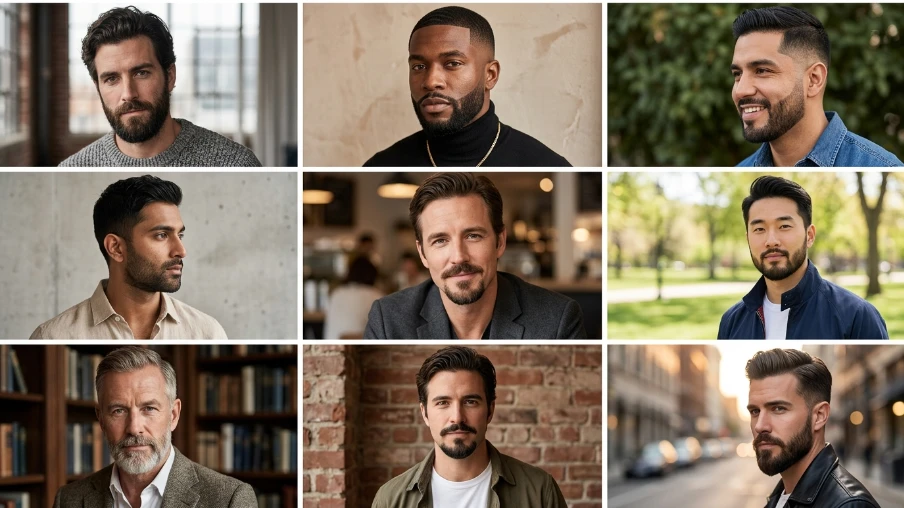
A double chin is one of those things that photographs make far more obvious than real life, and most men who have one are significantly more aware of it than anyone else in the room. The good news is that the right beard style genuinely changes the visual narrative. Not in a desperate or obvious way, but in the same quiet way that a well-fitted suit makes your posture look better. The proportions shift, the angles appear, and the whole face reads differently.
Beard styles for double chin concerns work through a simple principle. A beard that adds vertical length below the jaw, keeps the sides controlled, and draws the eye downward rather than sideways creates the visual impression of a more defined, angular jaw. The double chin does not disappear, but it becomes significantly less prominent because the beard reframes the entire lower face.
These 17 beard styles cover every growth level, face type, and grooming commitment level. Some require a barber. Some you can maintain entirely at home. All of them work on the same underlying logic that makes this approach so consistently effective.
Why the Right Beard Style Makes a Real Difference
Before getting into specific styles, it helps to understand the mechanics behind why certain beard styles work for double chin concerns and others make things worse.
The key variables are length at the chin, width at the cheeks, and neckline placement. A beard that grows longest at the chin adds vertical length to the face, which makes the jaw appear more defined and the neck area less prominent. A beard that is kept tighter at the cheeks and wider at the chin creates a triangular shape that points downward, adding the angular quality that a round or full face naturally lacks.
Neckline placement is perhaps the most critical and most misunderstood element. A neckline set too high, sitting close to the jaw, makes the double chin more visible by framing it rather than concealing it. A neckline set correctly, just above the Adam’s apple at the natural curve of the neck, provides coverage over the soft area beneath the jaw without looking like an unkempt or overgrown beard.
Understanding these three principles before choosing a style helps you pick the right option for your specific face and growth pattern.
17 Beard Styles That Help Conceal a Double Chin Look 2026
1. Full Beard with Defined Neckline
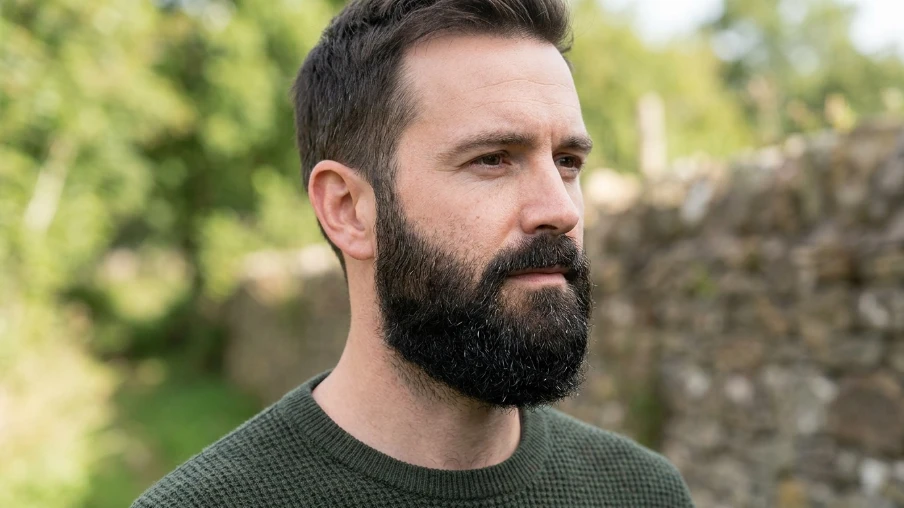
The full beard for double chin concerns is one of the most effective options available because it provides the most coverage of the area beneath the jaw while simultaneously adding significant length and density to the lower face. A full beard that fills in completely from the cheekbones down through the jaw and chin creates a visual anchor for the lower face that draws attention away from the soft tissue underneath.
The neckline on a full beard must be set correctly to achieve the face-slimming effect. Place the neckline at a natural curved line just above the Adam’s apple, following the natural curve of the neck rather than drawing a straight horizontal line. This placement covers the double chin area without requiring the beard to be excessively long, and gives the overall beard shape a natural, intentional quality.
Condition the beard daily with a beard oil to keep the full coverage looking healthy and dense rather than dry and patchy. A full beard that is well-moisturized and groomed reads as a deliberate style choice rather than simply unshaved growth.
2. Goatee Beard for Round Face

The goatee is one of the most reliable beard styles for double chin management because it concentrates all the beard’s visual weight at the chin point, adding vertical length to the lower face while keeping the cheeks completely clean. The result is a beard shape that draws the eye downward toward the chin point rather than sideways across the widest part of the face.
A well-shaped goatee beard for round face styling should have a rounded or slightly pointed bottom edge rather than a flat horizontal trim. The pointed or rounded chin shape creates a natural lengthening effect that works directly against the horizontal softness of a round or full face. Connect the chin beard to a neatly trimmed mustache for a complete, polished look that suits professional and casual settings equally.
3. Van Dyke Beard Style
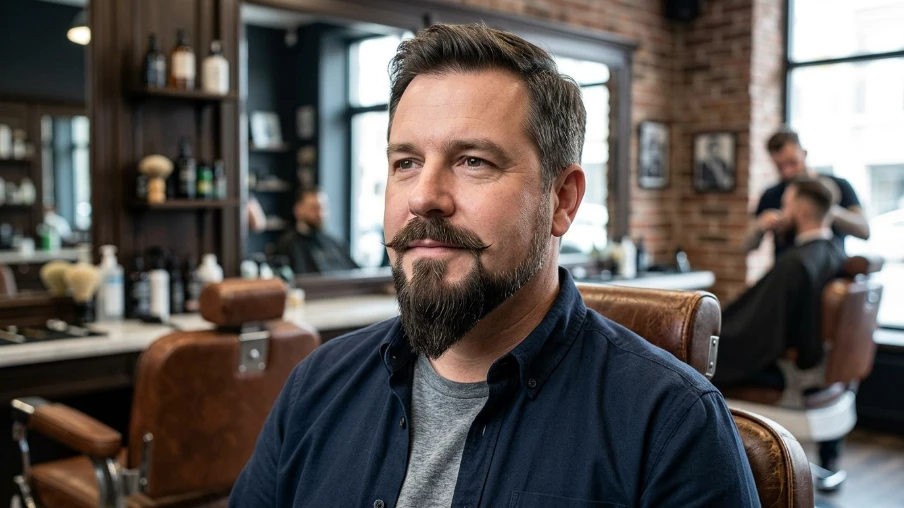
The Van Dyke is a beard style that separates the mustache from the chin beard with a clearly shaved gap between them, creating a more graphic and intentional look than a standard connected goatee. The chin beard is typically worn slightly longer and pointed at the bottom, while the mustache is trimmed to a neat, medium length above the lip.
The Van Dyke beard style works well for double chin concerns because the pointed chin beard creates a strong downward visual line that draws attention toward the chin tip and away from the area beneath the jaw. This is a stylish beard look with a long history that continues to appear genuinely contemporary in 2026 when kept clean and precisely shaped.
Quick Reference Table: Beard Styles for Double Chin at a Glance
| Beard Style | Coverage Level | Maintenance | Growth Needed | Best For |
|---|---|---|---|---|
| Full Beard | Maximum coverage | Medium | 4 to 6 weeks | All face shapes |
| Goatee | Chin focus and length | Low to medium | 2 to 3 weeks | Round and oval faces |
| Van Dyke | Graphic chin definition | Medium | 3 to 4 weeks | Oval and heart faces |
| Short Boxed Beard | Full but controlled | Low to medium | 3 to 4 weeks | Professional settings |
| Stubble Beard | Shadow definition | Low | 1 to 2 weeks | Beginners and minimal look |
| Chin Strap | Jawline outline | Medium | 2 to 3 weeks | Defined jaw preference |
| Circle Beard | Mouth and chin zone | Low to medium | 2 to 3 weeks | Round faces |
4. Short Boxed Beard with Clean Lines

The short boxed beard style is one of the most practical and universally flattering beard styles for men dealing with a double chin or fuller lower face. The beard is maintained at a short, consistent length across the cheeks, jaw, and chin, with sharp, defined edges at the cheek line and a correctly placed neckline that covers the area beneath the jaw.
The boxed shape provides full coverage while the defined edges create the angular, structured appearance that softer faces often lack. This is a professional beard style that suits corporate environments and client-facing roles where a more exuberant beard would feel out of place. Maintain with a quality beard trimmer at the same guard setting every three to four days to keep the length consistent and the edges sharp.
5. Stubble Beard for Double Chin

The stubble beard is a genuinely underrated option for men who want a low-maintenance beard style that still addresses double chin concerns. Maintained between two and five millimeters, designer stubble beard styling creates the shadow effect of a defined jawline without requiring the growth period or daily maintenance of a longer beard.
The stubble beard double chin approach works best when the stubble is maintained at a slightly longer length at the chin than at the sides, creating subtle but visible length differentiation that draws the eye downward. Keep the neckline clean with a detail trimmer at the correct placement just above the Adam’s apple, and the overall effect reads as intentional and well-groomed rather than simply unshaved.
6. Chin Strap Beard Style
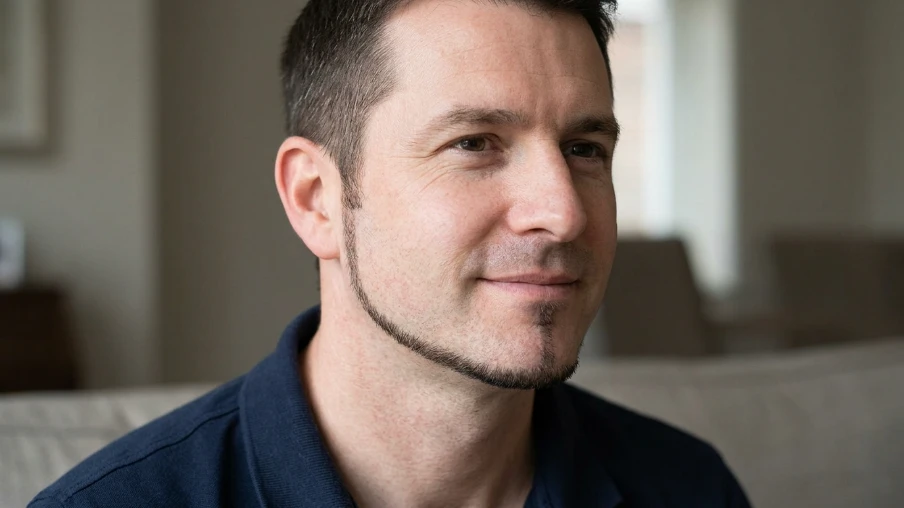
The chin strap beard style creates a thin line of facial hair that traces the jawline from one sideburn down and across the chin and back up to the other sideburn. It is one of the most architecturally precise beard styles for double chin concerns because it literally draws a line along the jaw where definition naturally lacks.
The chin strap beard style works best when it is kept narrow and precise rather than wide. A very thin line of hair following the jaw creates a sharp, graphic outline that gives the visual impression of a defined bone structure underneath. Keep the area above and below the strap cleanly shaved for maximum contrast and definition, and maintain with a detail trimmer every two to three days to keep the precision intact.
7. Circle Beard for Round or Full Face

The circle beard style is a connected ring of facial hair that forms a circle around the mouth, combining a trimmed mustache that connects directly into a rounded chin beard without any gap. It is compact, clean, and effective at adding definition to the mouth and chin zone of the face.
For men with a double chin or chubby face, the circle beard style concentrates grooming attention at the center of the face, drawing the eye inward and downward rather than outward across the width of the cheeks. Keep the circle beard neatly rounded at the bottom and avoid letting it grow too wide at the sides, which would defeat the narrowing effect the style creates.
8. Sculpted Beard for Face Slimming
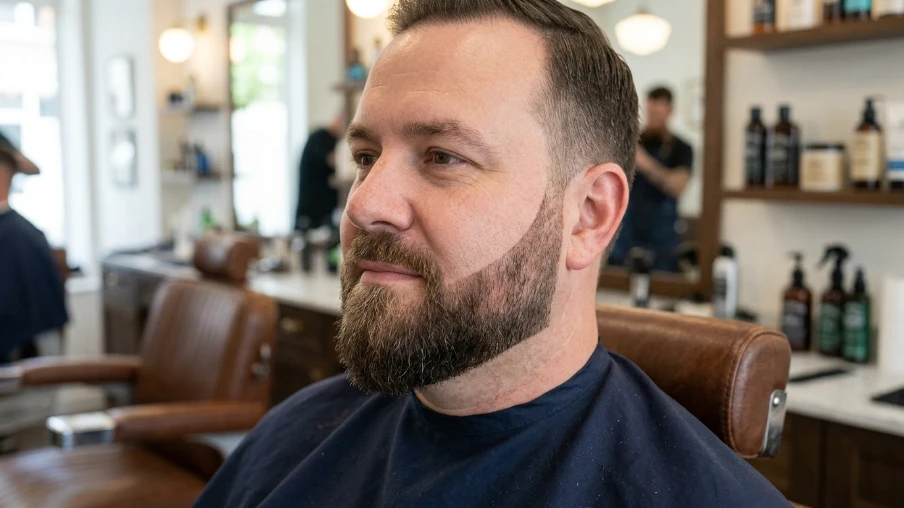
A sculpted beard takes standard grooming a step further by specifically shaping the beard to create an illusion of angular definition that the underlying face may not possess naturally. The cheek lines are arched or angled to create a more triangular facial frame, the chin portion is allowed to grow slightly longer than the sides, and the neckline is set precisely to cover the double chin area.
This sculpted beard approach is where a professional barber makes the most significant difference. A barber who understands facial geometry can shape the cheek lines and chin length in a way that visually lengthens the face and defines the jaw with a precision that is difficult to achieve at home. Visit every two to three weeks for maintenance to keep the sculpted shape accurate and effective.
9. Heavy Beard with Fade
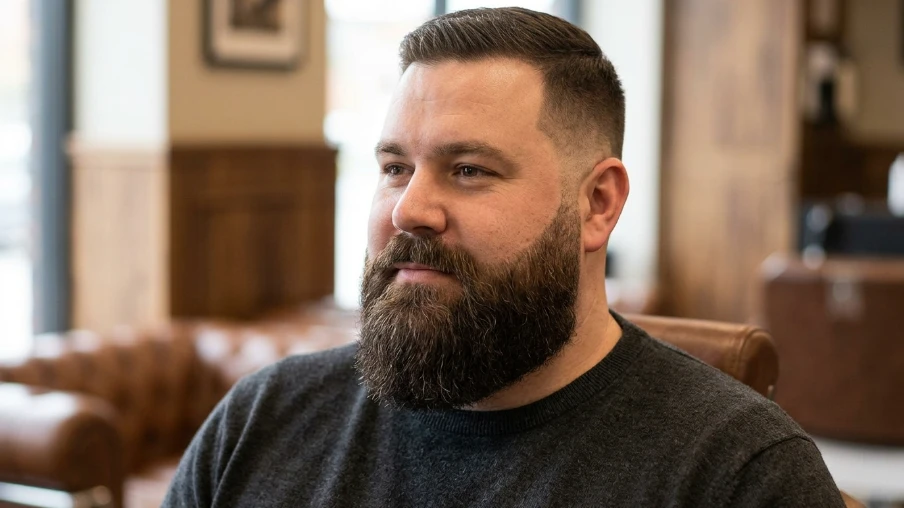
The heavy beard style for men with a double chin works through sheer density and coverage. A fuller, denser beard covering the entire lower face and jaw area provides maximum concealment of the soft tissue beneath the jaw while simultaneously adding significant structure and visual weight to the lower face.
Pairing a heavy beard style with a fade haircut that matches the beard fade creates a cohesive, well-thought-out appearance where the hair and beard flow together visually. The fade on the beard at the cheeks connects smoothly to the haircut above, and the fuller density at the chin and jaw draws attention downward. Apply a beard balm regularly to keep the dense beard soft, manageable, and lying in the intended direction rather than expanding outward.
10. Neat Beard for Chubby Face
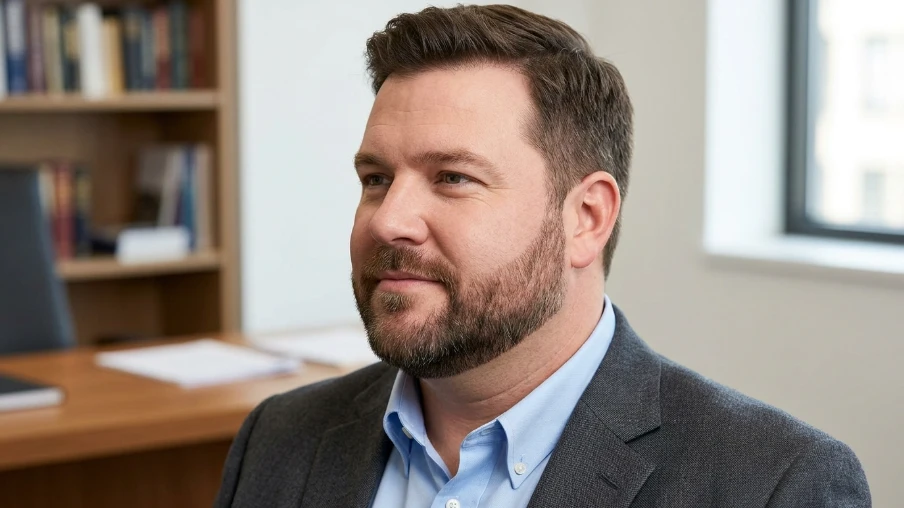
Sometimes the most effective approach is not the most dramatic one. A neat, well-maintained beard at a medium-short length with clean edges and a correctly placed neckline can address double chin concerns without requiring a long beard or complex shape.
The neat beard for chubby face approach focuses on precision rather than volume. Every edge is defined, the length is consistent throughout, and the neckline is placed at exactly the right point to cover the double chin area without dipping so low that the beard appears to grow onto the neck. This style suits men in professional environments where a heavier or more expressive beard might feel inappropriate.
11. Fade Beard with Jawline Definition
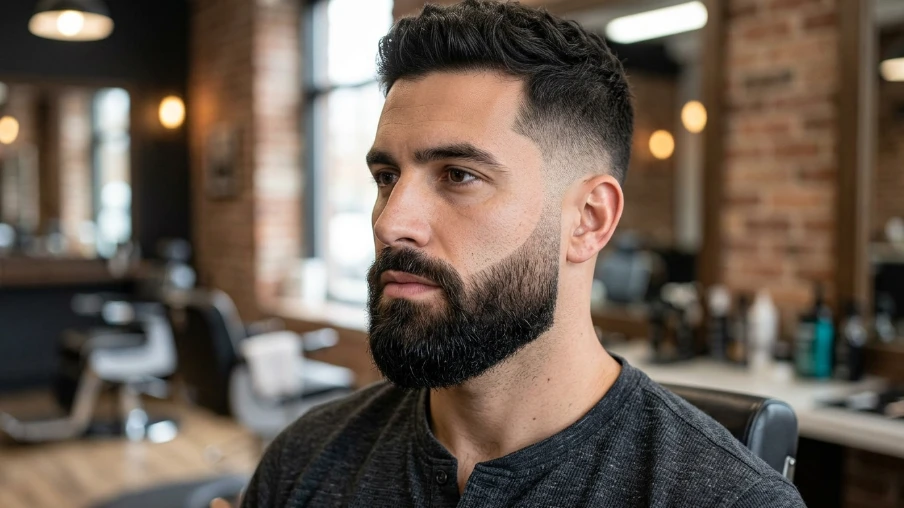
The fade beard jawline style uses the same graduation principle as a haircut fade but applied to the beard. The beard is faded from denser at the chin and jaw down to very short or skin-close at the cheeks and sideburns. This creates a concentrated visual weight at the jawline and chin area that naturally draws attention to those points rather than the softer areas above or below.
A barber with experience in beard fading can create a clean, well-executed fade that transitions smoothly rather than appearing patchy or uneven. The fade beard approach is particularly effective for men with naturally patchy beard growth on the cheeks because the fade makes intentional what might otherwise look like incomplete growth.
12. Designer Stubble with Defined Shape
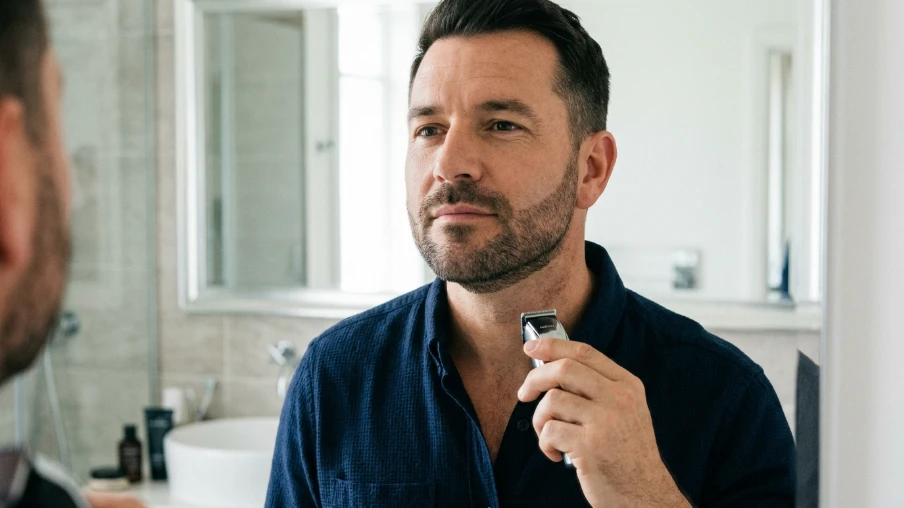
Designer stubble is often dismissed as simply not having shaved, but when it is shaped with a defined cheek line and a correctly placed neckline, it becomes one of the most versatile and attractive beard styles for double chin concerns. The shadow of even short stubble across the jaw and chin area creates definition that clean-shaved skin cannot provide.
For the best designer stubble beard result, use a precision trimmer with a guard setting between two and four millimeters and maintain consistently every two to three days. Define the cheek line with a straight razor or precision blade to create a clean upper edge, and set the neckline at the correct position above the Adam’s apple. The result is a polished, effortlessly masculine look that suits men who want groomed facial hair without the commitment of a longer beard.
13. Modern Hipster Beard with Length at Chin

The modern hipster beard takes a medium-length beard and styles it with deliberate attention to the chin area, allowing the chin portion to grow slightly longer than the sides and cheeks. This natural length differentiation creates vertical line emphasis at the chin that addresses the double chin concern by pointing the eye downward.
The modern hipster beard look keeps the cheek lines relatively natural and the overall shape slightly relaxed, but the key is in maintaining the length relationship between the sides and the chin rather than trimming everything to the same length. Apply a light beard balm to manage the texture and keep the chin portion falling cleanly downward rather than spreading outward.
14. Patchy Beard Styled Strategically

Not every man can grow a full, dense beard, and patchy growth patterns often lead men to either give up on facial hair entirely or grow it out hoping the patches will fill in. For men with patchy beard growth who also have a double chin, a strategic approach to styling the available growth produces a much better result than either extreme.
The most effective approach to patchy beard styling tips for double chin concerns is to trim the entire beard to a short, even length that minimizes the contrast between dense and sparse areas. At shorter lengths, patches are far less noticeable and the overall texture appears more consistent. Focus the available growth at the chin and jaw area where coverage matters most for the face-slimming effect, and keep the cheeks clean-shaved if the growth there is too sparse to look intentional.
15. Structured Beard Shape with Angular Cheek Line
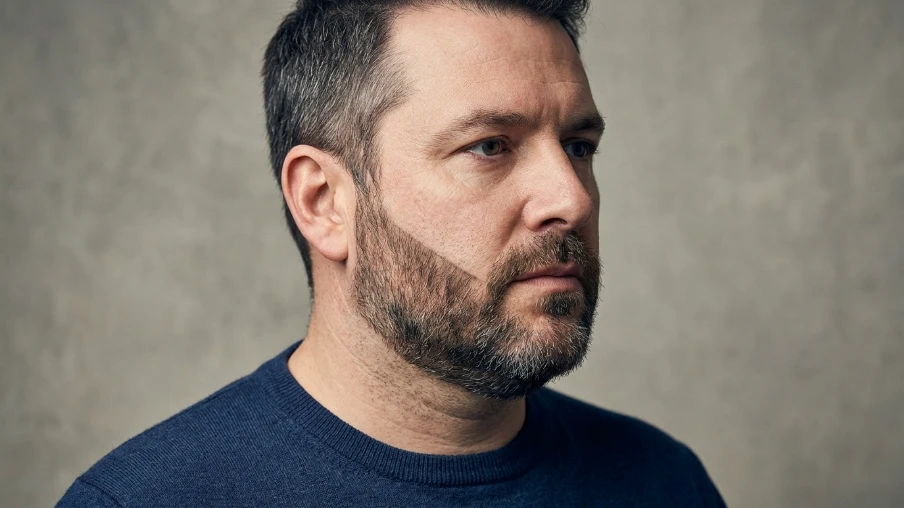
The cheek line is the most overlooked element of beard shaping for men with double chins. Most men allow their cheek line to grow naturally, which often means a soft, curved line that mirrors the roundness of the face below it. Replacing that natural soft cheek line with a defined, slightly angled cheek line introduces angular structure to the upper portion of the beard that changes the overall face shape perception significantly.
An angled cheek line that rises slightly from the mustache corner toward the ear creates an upward-opening shape that makes the face appear longer and narrower. Paired with a fuller chin section, this structured beard shape creates a complete face-slimming effect that addresses both the width and the double chin concern simultaneously.
16. Clean Beard Neckline Style
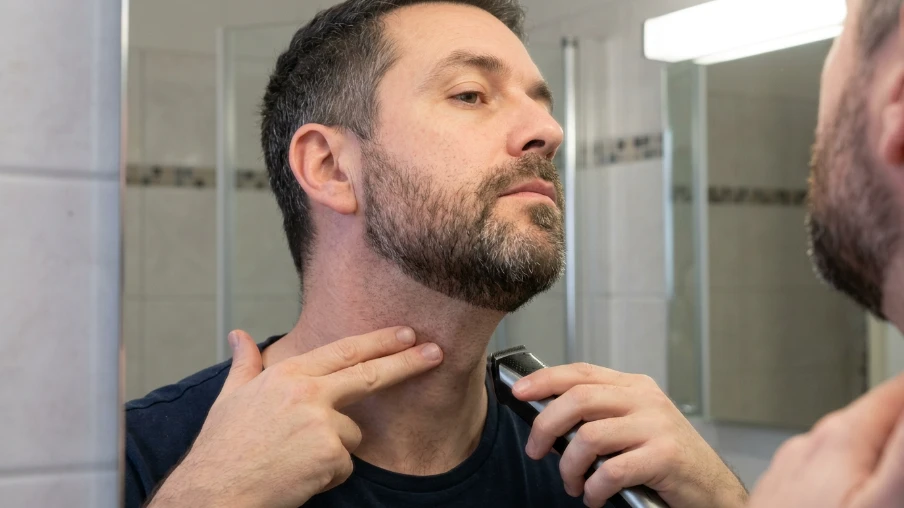
The clean neckline is not a complete beard style in itself but it is arguably the most important element in any beard style for double chin management. A poorly placed or unclean neckline actively emphasizes the double chin by either sitting too high, which frames and highlights the area below the jaw, or being undefined and shapeless, which adds visual bulk to the neck rather than reducing it.
The correct neckline position is a curved line that follows the natural contour of the neck just above the Adam’s apple. To find this line, place two fingers above the Adam’s apple and trim everything below those fingers. Follow the natural curve of the neck rather than drawing a straight horizontal line, which tends to look unnatural and geometric against the curved shapes of the face and jaw.
Maintaining this clean neckline at home with a precision trimmer every three to four days is one of the highest-return grooming habits a man with a double chin can adopt.
you may also like this: 15 Beard Friendly Haircuts for a Bold Masculine Look Guide
17. Defined Jawline Beard with Side Control
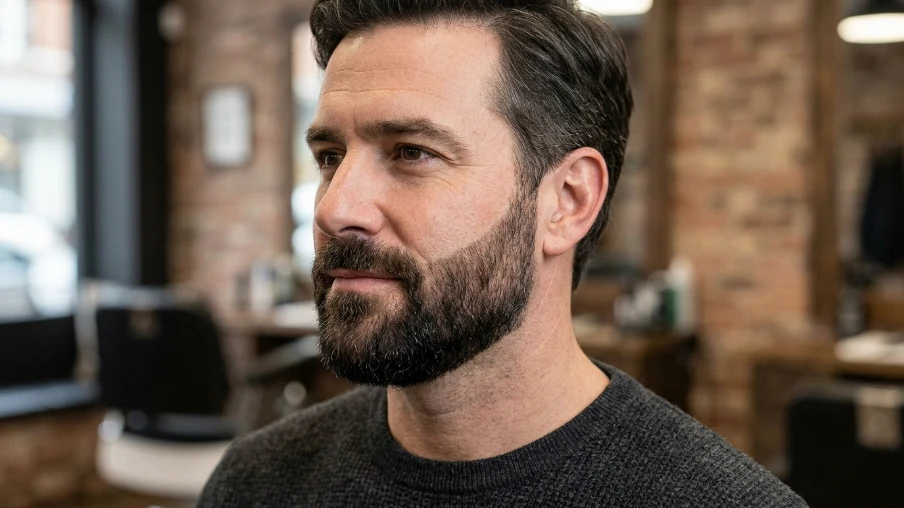
The final style on this list combines several of the principles discussed throughout the article into one cohesive approach. The beard is maintained at a medium-short length with maximum density focused at the jaw and chin, the sides are kept tighter than the front to prevent lateral expansion, the cheek line is slightly angled for definition, and the neckline is set correctly to cover the double chin area.
This defined jawline beard style is not one specific look but rather a set of principles applied to whatever natural beard growth pattern you have. It is the most intentional and complete approach to beard styles for double chin concerns because it addresses every variable, coverage, shape, definition, and neckline placement, simultaneously.
Common Mistakes to Avoid
Setting the neckline too high is the single most damaging mistake for men with a double chin. A neckline that sits at the jaw rather than below it frames the double chin perfectly, drawing the eye directly to the area most men are trying to minimize. Always set the neckline lower than feels natural on first instinct.
Keeping the beard at the same length from cheek to chin removes the length differentiation that makes beard styles for double chin concerns effective. Even a small difference of two to three millimeters more length at the chin than the sides creates the visual lengthening effect the face needs.
Neglecting beard conditioning is another common error. A dry, coarse beard appears bushier and less defined than a conditioned one, adding perceived width rather than the length and definition these styles are designed to create. A daily beard oil application takes thirty seconds and makes a visible difference to both the appearance and the manageability of any beard style.
Choosing the Right Style for Your Growth Pattern
Not every style on this list works for every growth pattern. Men with strong, even growth across the full beard area have the most options and can attempt any style from the full beard to the sculpted shape with equal confidence. Men with patchy cheeks but stronger chin growth are actually in an ideal position for a goatee, Van Dyke, or circle beard, all of which focus specifically on the chin area where their growth is strongest. Men with generally sparse growth should look at the stubble and designer stubble options, which work with minimal density at consistently short lengths.
Wrapping Up
Beard styles for double chin concerns give men a genuine, practical, and immediately available tool for reshaping the visual impression of their lower face. None of the styles on this list require expensive products, specialized equipment, or significant time investment. What they do require is understanding the neckline placement, the importance of chin length over cheek width, and the value of consistent maintenance.
Pick a style that matches your current growth pattern and grooming commitment level, set the neckline correctly from day one, and maintain the shape with regular trimming. The result is a beard that works for your face rather than simply on your face, and the difference in how you look and feel about your appearance is worth every minute spent on the process.
Frequently Asked Questions
Q1. What beard style is best for hiding a double chin?
A full beard with a correctly placed neckline is the most effective option for maximum coverage. For men who prefer less beard, a goatee or Van Dyke with a pointed or rounded chin creates the best vertical length effect that minimizes the appearance of a double chin.
Q2. Where exactly should I set my beard neckline if I have a double chin?
Place the neckline at a natural curved line just above the Adam’s apple, roughly two finger-widths above it. Follow the natural curve of the neck rather than drawing a straight horizontal line. This covers the soft area beneath the jaw without the beard appearing to grow onto the neck.
Q3. Does stubble help with a double chin?
Yes. Even short stubble at two to four millimeters creates a shadow definition across the jaw and chin area that makes the lower face appear more structured and defined. Maintained with a clean neckline and defined cheek lines, designer stubble is a genuinely effective low-commitment option.
Q4. Should I shave my neck if I have a double chin?
Yes, but carefully. You should maintain a clean neckline at the correct position just above the Adam’s apple rather than shaving the entire neck bare. Clean-shaving everything below the jaw without a defined beard shape removes the coverage that helps minimize double chin appearance.
Q5. Can a patchy beard still work for double chin concealment?
Yes, with the right approach. Trim patchy growth to a short, consistent length to minimize the appearance of sparse areas. Focus on maintaining density at the chin and jaw rather than the cheeks, and consider styles like the goatee or circle beard that concentrate coverage specifically in the areas where most men have their strongest growth.
1 Comment