
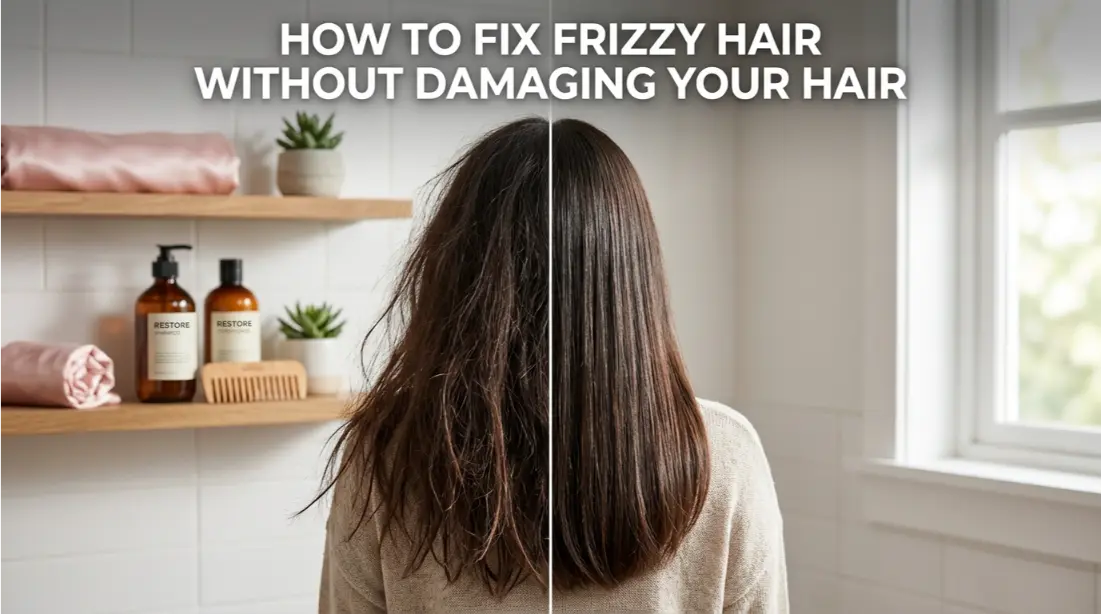
Frizzy hair is one of the most common hair problems for both women and men. Sometimes hair looks dry, rough, puffy, or difficult to manage even after washing and styling. Humidity, heat tools, overwashing, and wrong hair products are some major reasons behind frizzy hair.
Many people try random oils or heavy creams, but frizz usually comes from lack of moisture, damaged hair cuticles, or poor hair care habits. The good thing is that frizzy hair can improve when you follow the right routine and avoid common mistakes.
In this guide, you will learn simple ways to fix frizzy hair, daily habits that help smooth the hair, and mistakes you should avoid if you want softer and healthier looking hair.
Why Hair Gets Frizzy
Hair becomes frizzy when the outer layer of the hair, called the cuticle, becomes dry or damaged. When the cuticle is open, moisture from the air enters the hair strands and makes the hair swell. This creates puffiness and rough texture.
Some people naturally have frizz because of curly or wavy hair texture, while others get frizz from daily habits.
Common causes of frizzy hair include:
- Washing hair too often
- Using hot water during washing
- Heat styling without protection
- Dry weather or humidity
- Hair coloring or bleaching
- Rough towel drying
- Using harsh shampoos
Understanding the cause of your frizz helps you choose the right solution instead of wasting money on products that do not work for your hair type.
Common Frizzy Hair Mistakes
Many people unknowingly make their frizzy hair worse because of small daily mistakes.
- Washing hair every day removes natural oils
- Using very hot water dries the hair quickly
- Rubbing hair aggressively with a towel causes friction
- Overusing straighteners and curling tools damages hair texture
- Applying heavy oils on fine hair can make hair greasy instead of smooth
Avoiding these mistakes is often the first step toward smoother and healthier hair.
How to Fix Frizzy Hair Step by Step
1. Use a Gentle Shampoo
Harsh shampoos remove too much oil from the scalp and hair. This makes the hair dry and rough after washing.
Choose a sulfate-free or moisturizing shampoo that cleans the scalp without making the hair feel stripped. Washing your hair two or three times a week is usually enough for most people.
If your scalp becomes oily quickly, focus shampoo mainly on the scalp area instead of the full hair length.
2. Always Use Conditioner
Conditioner helps close the hair cuticle and keeps moisture inside the strands. This makes hair softer and easier to manage.
Apply conditioner mainly on mid-length and ends because these parts are usually drier. Leave it for a few minutes before rinsing.
For very dry hair, a deep conditioning mask once a week can help improve texture over time.
3. Stop Using Very Hot Water
Hot water removes moisture from the hair very quickly. This is one major reason why hair feels rough after washing.
Use lukewarm water for washing and finish with slightly cool water if possible. Cool water helps smooth the hair surface and reduce puffiness.
4. Dry Hair Gently
Many people rub their hair strongly with a towel after washing. This creates friction and makes frizz worse.
Instead, gently squeeze extra water from the hair using a microfiber towel or soft cotton t-shirt. This simple change can make a noticeable difference.
5. Reduce Heat Styling
Straighteners, curling irons, and blow dryers can damage the hair cuticle when used too often.
If you use heat tools regularly:
- Apply heat protectant first
- Use medium heat instead of maximum heat
- Avoid daily heat styling
Air drying whenever possible is better for frizzy hair.
6. Use Lightweight Anti-Frizz Products
Heavy creams and oils are not suitable for every hair type. Fine hair can become greasy very quickly.
Choose lightweight serums, leave-in conditioners, or anti-frizz sprays according to your hair type.
For curly or thick hair, a curl cream can help control frizz while keeping natural texture.
7. Sleep on a Silk Pillowcase
Cotton pillowcases create friction while sleeping. This can cause roughness and tangled hair in the morning.
Silk or satin pillowcases are softer on the hair and help reduce friction during sleep.
This small habit is very useful for people with curly, wavy, or dry hair.
Hair Care Tips Based on Hair Type
Different hair types need different frizz control methods.
Fine Hair
- Use lightweight products
- Avoid heavy oils
- Do not overwash hair
- Use volume-friendly leave-in sprays
Curly Hair
- Use moisturizing creams
- Avoid brushing dry curls
- Use a microfiber towel
- Deep condition weekly
Thick Hair
- Use anti-frizz serums
- Apply leave-in conditioner
- Trim damaged ends regularly
- Avoid excessive heat styling
Quick Frizzy Hair Fix Guide
| Problem | Possible Cause | Simple Fix |
|---|---|---|
| Dry frizz | Lack of moisture | Use moisturizing conditioner |
| Puffy hair | Humidity | Apply anti-frizz serum |
| Rough texture | Heat damage | Reduce heat styling |
| Frizz after washing | Towel friction | Use microfiber towel |
| Flat greasy frizz | Heavy oils | Switch to lightweight products |
Foods and Habits That Help Hair Health
Hair condition also depends on overall health and routine.
Try to:
- Drink enough water daily
- Eat protein-rich foods
- Include healthy fats in your diet
- Sleep properly
- Reduce stress when possible
Healthy habits support stronger hair and may help reduce dryness over time.
When to Trim Frizzy Hair
Split ends make frizz look worse because damaged ends appear rough and uneven.
Trimming the hair every 6 to 8 weeks helps maintain smoother ends and cleaner shape. Even a small trim can improve the overall appearance of frizzy hair.
Common Myths About Frizzy Hair
Oil fixes all frizz
Too much oil can sometimes make hair heavy or greasy instead of smooth.
Brushing hair more reduces frizz
Overbrushing can actually create more friction and puffiness.
Frizz only happens to dry hair
Even oily hair can become frizzy when the cuticle is damaged.
Real Experience and Practical Observation
One thing many people notice after changing their hair routine is that frizz usually does not improve overnight. In many cases, hair starts feeling softer after a few weeks of consistent care instead of constant product switching.
People with fine hair often see better results after reducing heavy oils and heat styling, while those with curly or thick hair usually benefit more from deep conditioning and moisture-focused products. A common mistake is expecting one product to completely remove frizz, but daily habits usually make the biggest difference over time.
Hair stylists also commonly recommend focusing on moisture balance instead of trying too many strong treatments at once. Gentle washing habits, less heat exposure, and regular trims often improve hair texture more than expensive salon products.
Conclusion
Frizzy hair is usually a sign that the hair needs better moisture balance and gentler care. Small daily habits like using mild shampoo, reducing heat styling, drying hair carefully, and choosing the right products can make a big difference over time.
The most important thing is understanding your hair type and avoiding routines that create dryness or damage. You do not need expensive salon treatments to improve frizz. Consistent care and simple habits often give better long-term results.
Frequently Asked Questions
1. What causes frizzy hair the most?
Dryness, humidity, heat damage, and overwashing are some of the biggest causes of frizzy hair.
2. Can frizzy hair become smooth naturally?
Yes. Proper moisture, gentle washing habits, and reduced heat styling can help improve hair texture naturally over time.
3. Is coconut oil good for frizzy hair?
Coconut oil may help some hair types, but using too much can make fine hair greasy or heavy.
4. How often should I wash frizzy hair?
Most people with frizzy hair should wash their hair around two or three times a week instead of daily.
5. Does humidity make hair frizzy?
Yes. Humidity allows extra moisture from the air to enter the hair strands, which causes puffiness and frizz.